

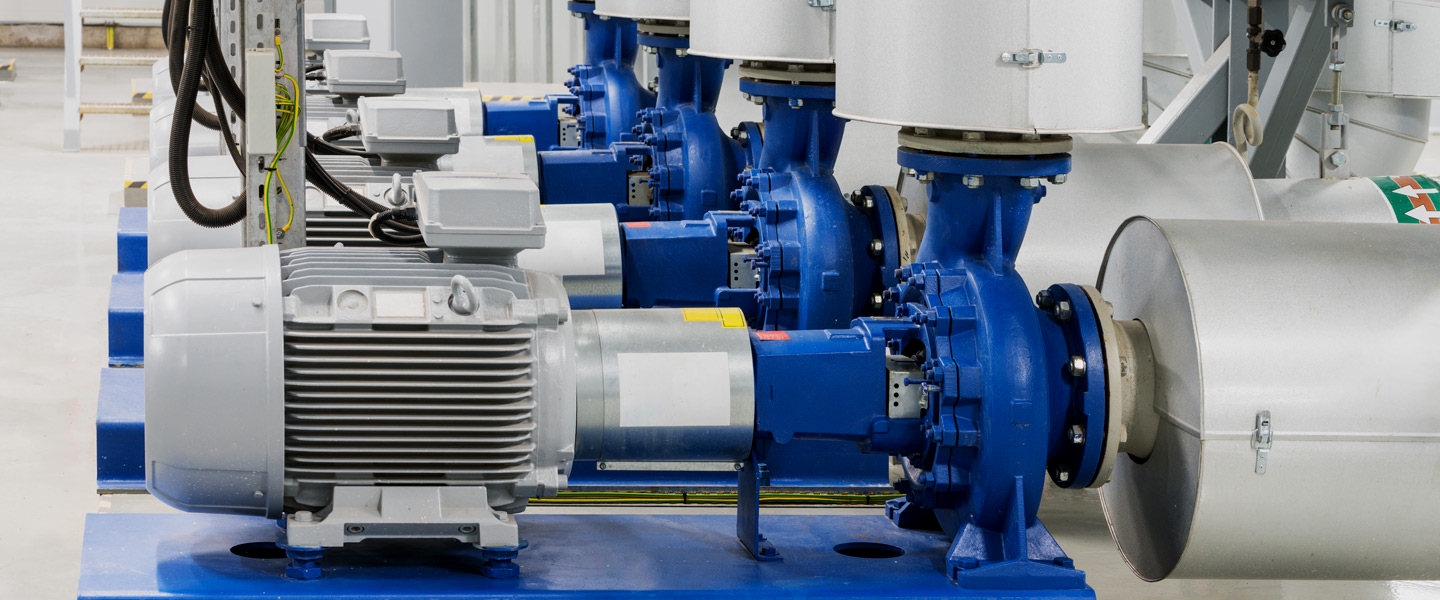
Pump Asset Management
Best Practices
Effective pump asset management is critical to ensuring reliability, efficiency, and long-term cost control in industrial and municipal operations. Best practices center on establishing standardized asset identification, maintaining accurate and accessible equipment data, and implementing routine condition monitoring to detect issues before they lead to failure. A structured approach—combining preventive and predictive maintenance, clear documentation, and lifecycle tracking—enables organizations to make informed decisions about repair versus replacement while minimizing unplanned downtime. By adopting these strategies, companies can extend equipment life, improve system performance, enhance safety, and significantly reduce total cost of ownership.
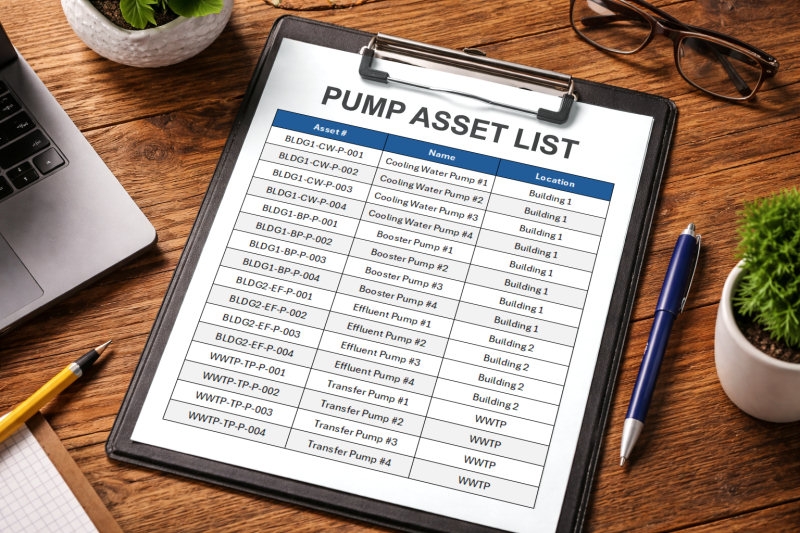
1. Establish a Standardized Naming Convention
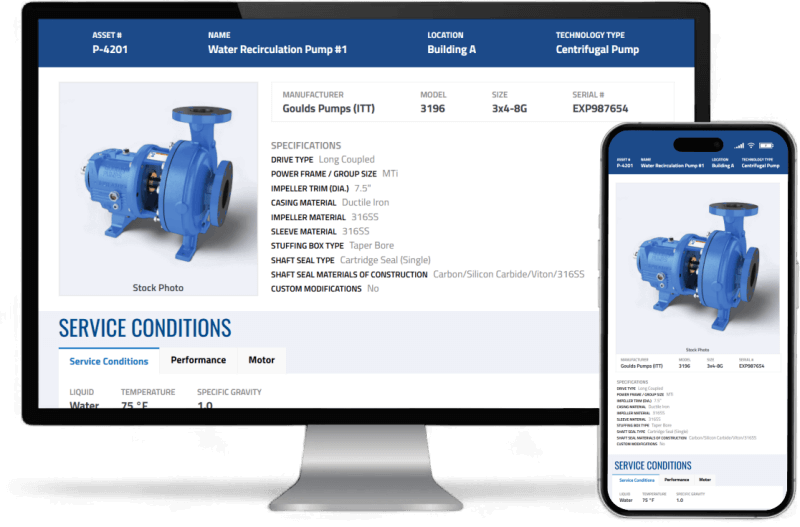
Every Asset ID# should be a unique identifier for each piece of equipment.
Best practice:
- Use a consistent format across all facilities
- Include key identifiers:
- Site / Area (e.g., PLT1, WWTP, BLDG-A)
- System or process (e.g., CW = Cooling Water)
- Equipment type (P = Pump)
- Sequence number (001, 002)
Example:
- PLT1-CW-P-001
Why it matters:
- Eliminates duplicate or vage naming ("Booster Pump #2" shows up everywhere)
- Makes data sorting and reporting actually usable
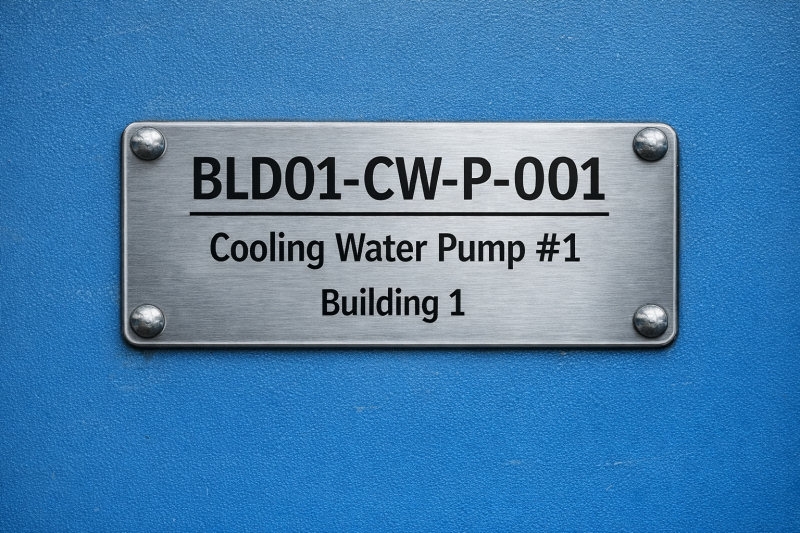
2. Physically Tag Every Pump (Clearly and Permanently)
If you can't identify it in the field instantly, the system fails.
Best practice:
- Use engraved stainless steel or anodized aluminum tags
- Attach in visible, consistent location
- Include:
- Asset ID, Name, Location
- QR or barcode (for digital integration)
Avoid:
- Stickers (they may fade or peel)
- Marker-written tags
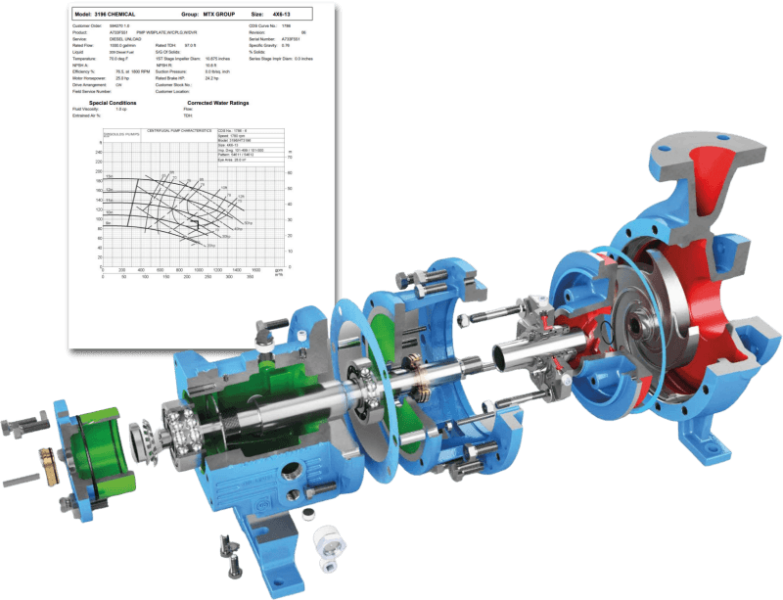
3. Capture Complete Equipment Metadata
The ID alone is useless without context.
Minimum required data:
- Manufacturer & model
- Serial number
- Pump type (centrifugal, gear pump, etc.)
- Performance data (flow / head)
- Motor details (HP, RPM, voltage, enclosure)
- Seal type (if available)
- Installation date
- Application (what it's pumping)
Advanced (high-value):
- Materials of construction
- Curve data / duty point
- NPSH available vs required
4. Tie the Pump to Its System (Not Just Itself)
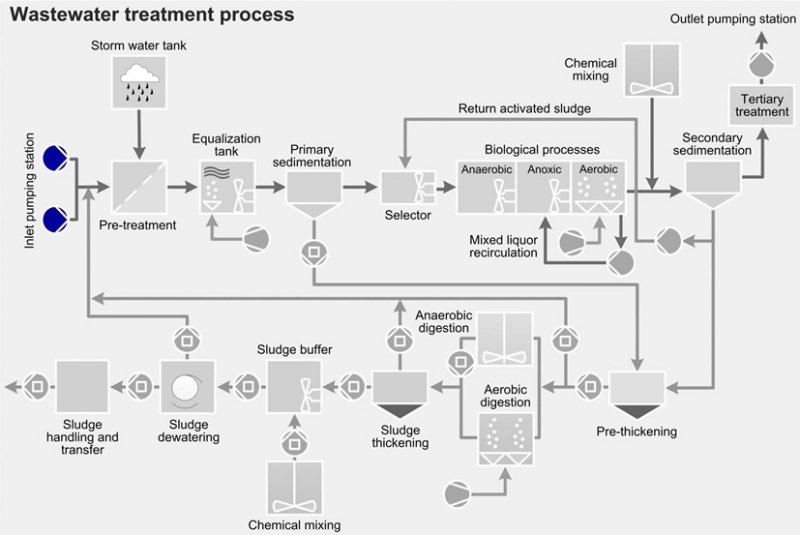
A pump doesn't operate in isolation.
Best practice:
- Link asset to:
- System (cooling water, RO, chemical dosing, etc.)
- Upstream/downstream equipment
- Control strategy (VFD, across-the-line, etc.)
Why it matters:
- Helps diagnose root causes (not just symptoms)
- Critical for audits and performance troubleshooting
5. Use Digital Asset Management (CMMS/EAM Integration)
If it lives only on paper, it won't be maintained.
Best practice:
- Store all asset data in a CMMS/EAM system
- Examples:
- SAP Plant Maintenance
- IBM Maximo
- UpKeep
- Phoenix Pumps EAMS
Enhancements:
- Attach:
- Photos
- Drawings
- Manuals
- Repair history
6. Implement QR Codes or Barcodes (High ROI)
This is one of the easiest upgrades with immediate payoff.
Best practice:
- Place QR code on each asset tag
- Link directly to:
- Asset record
- Maintenance history
- BOM/spare parts list
Field benefit:
- Tech scans → instantly sees specs, history, and prior failures

7. Standardize Data Entry (Avoid Garbage Data)
Bad data kills good systems.
Best practice:
- Use dropdowns instead of free text:
- Pump type
- Seal type
- Failure codes
- Enforce naming standards at entry level
8. Include Condition Monitoring Tie-Ins
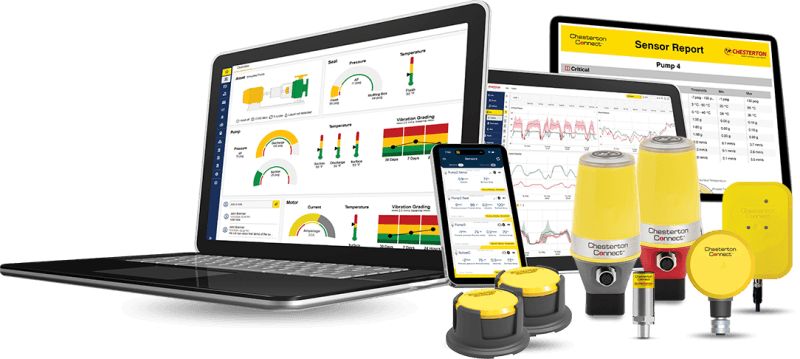
Asset ID should connect directly to reliability efforts.
Best practice:
- Link ID to:
- Vibration routes
- IR inspection points
- Oil analysis (if applicable)
Example:
- Vibration route references PLT1-CW-P-001
9. Document Spare Parts & Interchangeability
This is huge for reducing downtime.
Best practice:
- Identify:
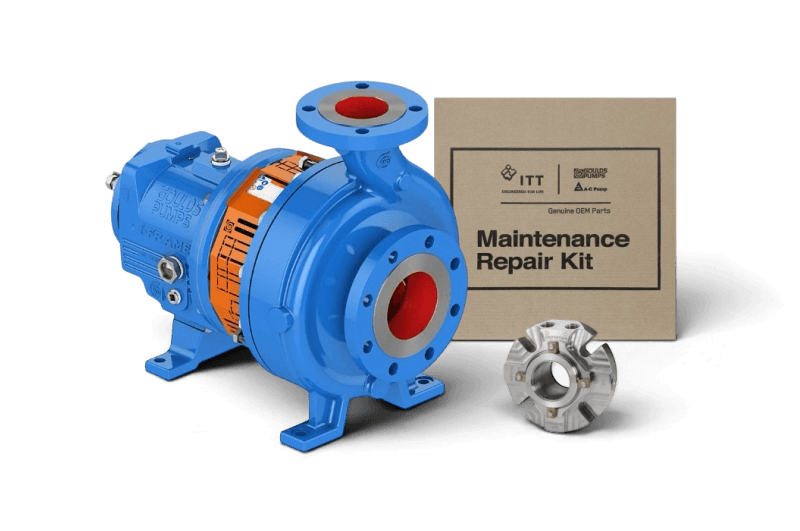
- Critical spares
- Interchangeable pumps
- Seal kits and bearing sets
10. Audit and Validate Regularly
Most systems degrade over time.
Best practice:
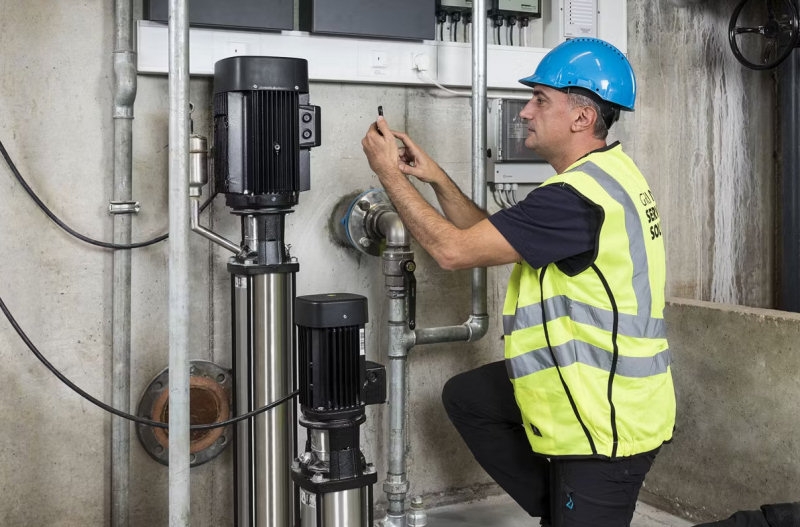
- Perform periodic field audits:
- Verify tag matches database
- Confirm equipment still exists / hasn't been modified
- Clean up:
- Duplicate assets
- Missing data
- Incorrect classifications

11. Use Photos as a Standard Requirement
A picture eliminates a lot of guesswork.
Best practice:
- Capture:
- Full pump + motor
- Nameplates
- Piping context
- Store in asset record